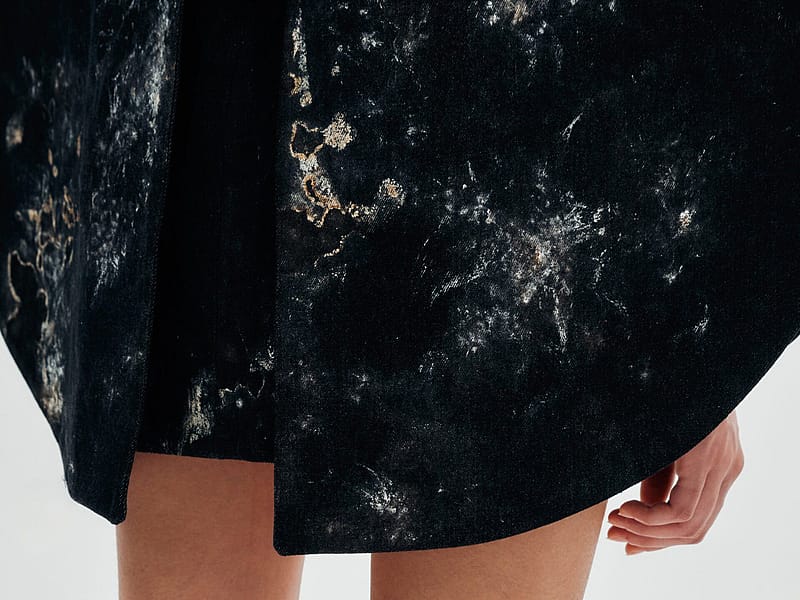
Mycelium – the invisible network beneath our feet – is far more than just the root structure of fungi. It possesses fascinating properties that make it one of the most promising sustainable materials of our time. Cultivating mycelium opens up new possibilities in fields such as fashion, architecture, and packaging. But how exactly does mycelium cultivation work, and what challenges does it present?
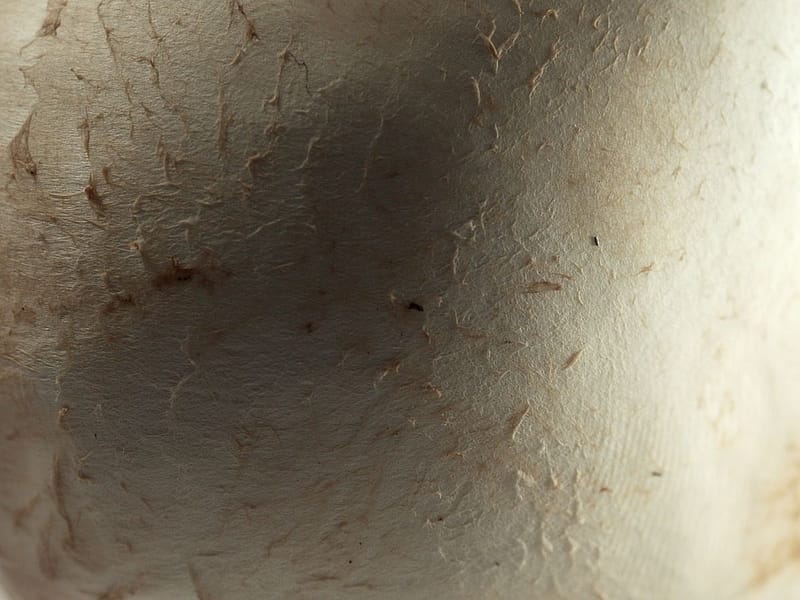
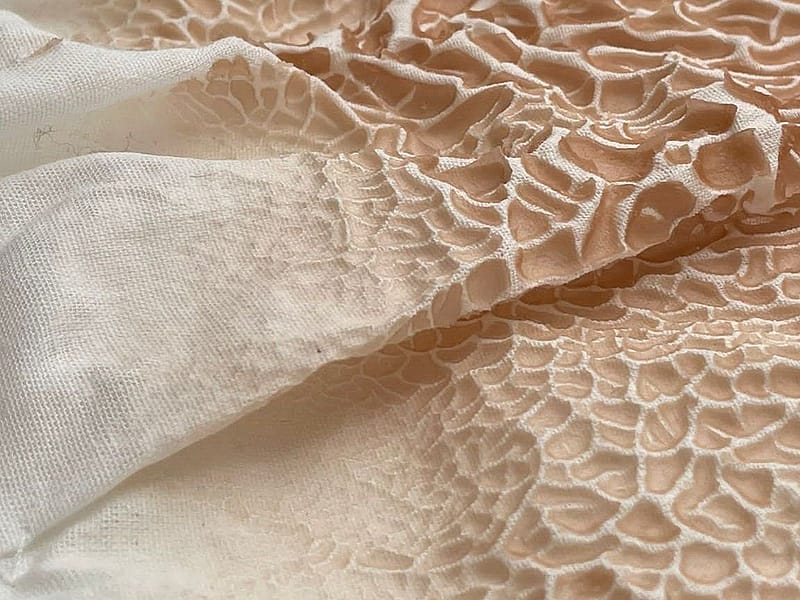
In my bachelor's collection Mycelium Interwoven, I transformed my small experiments into finished designs. The pieces Mycelia Whisper, Fungal Fusion, and Mushroom Muse were cultivated with mycelium, demonstrating the possibilities that arise when fungi grow on textile surfaces. Each of these designs embodies the symbiosis between nature and fashion, showcasing the potential of mycelium as a sustainable material in the fashion industry.

The Fundamentals of Mycelium Cultivation
I cultivate mycelium, the root-like structure of fungi, directly on textile surfaces to develop innovative materials. This process is as much an art as it is a science, requiring patience, precision, and a deep understanding of fungal biology.
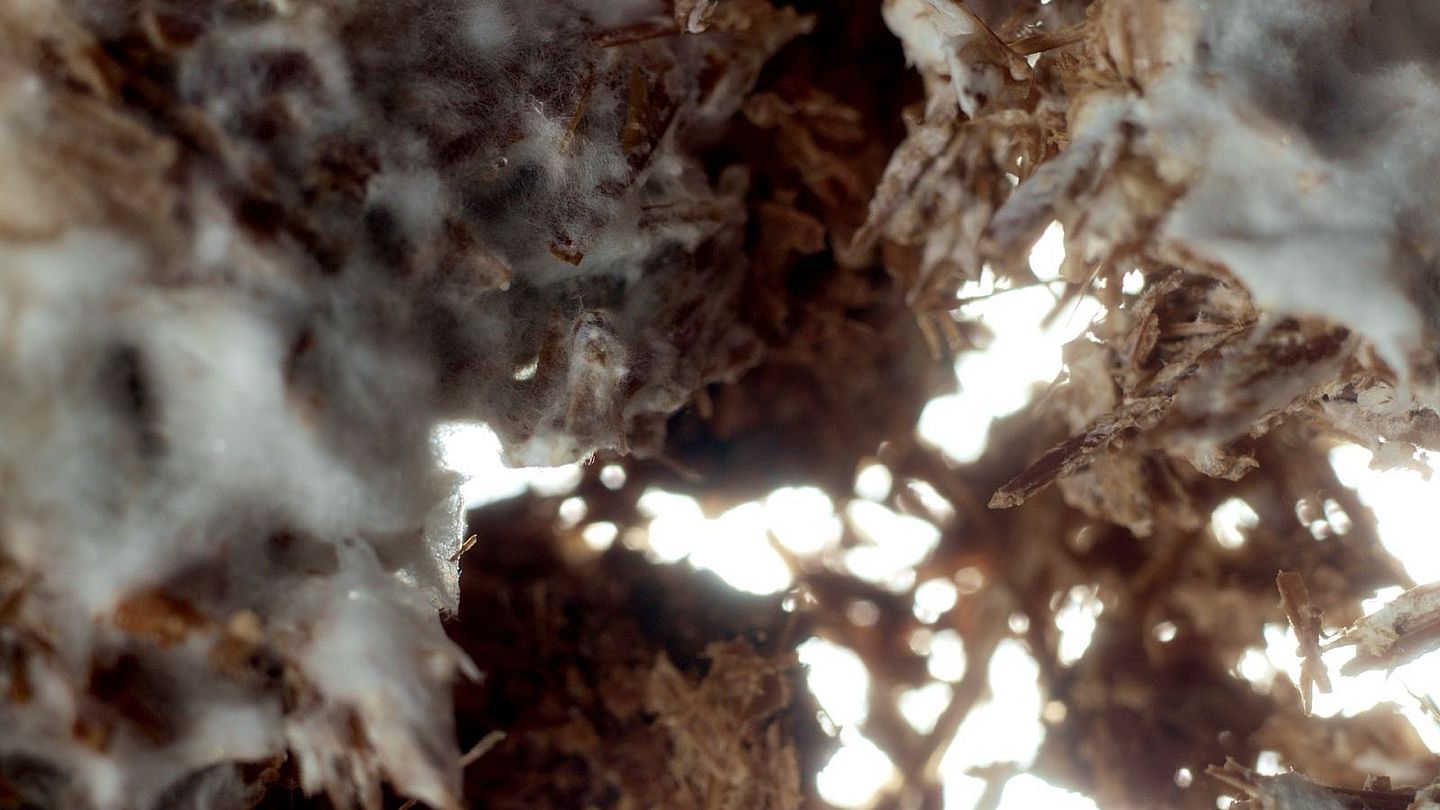
Mycelium cultivation begins with a suitable substrate, which typically consists of organic materials such as wood chips, straw, or coffee grounds. These provide the nutrient-rich base that mycelium needs to grow. By carefully controlling growth conditions and selecting specialized textile substrates, I can create surface materials with different textures, strengths, and aesthetic qualities. This method enables me to forge unique connections between textiles and fungi. The result is creations that are both functional and visually captivating.